
- Home
- Retirement
- Retirement Planning
High earners can still feel like they're on shaky ground financially. Rebuild your confidence with a plan that understands your present and protects your future.
 By
Dr. Preston D. Cherry, CFP®, Ph.D.
published
23 January 2026
in Features
By
Dr. Preston D. Cherry, CFP®, Ph.D.
published
23 January 2026
in Features
When you purchase through links on our site, we may earn an affiliate commission. Here’s how it works.
Share Share by:- Copy link
- X

If your household earns around $350,000 and you still feel behind, you are not alone. Many high earners are financially savvy. They understand the basics. They invest. They avoid obvious mistakes.
Yet confidence does not always rise with income.
That disconnect exists because most financial wellness advice was designed for simpler financial lives. One primary income. Fewer tax variables. Fewer competing priorities. Less decision fatigue.
From just $107.88 $24.99 for Kiplinger Personal Finance
Become a smarter, better informed investor. Subscribe from just $107.88 $24.99, plus get up to 4 Special Issues
CLICK FOR FREE ISSUE
Sign up for Kiplinger’s Free Newsletters
Profit and prosper with the best of expert advice on investing, taxes, retirement, personal finance and more - straight to your e-mail.
Profit and prosper with the best of expert advice - straight to your e-mail.
Sign upHigh-income households face a different reality. Taxes consume a larger share. Goals overlap. Time is scarce. Lifestyle costs become defaults instead of decisions. Over time, those pressures quietly erode clarity.
Financial wellness at higher income is not about tracking every purchase. It is about building a system that supports today's life while protecting tomorrow's options.
Think of it as an alignment process in five steps: Awareness, alignment, decisions, action and follow-through.
About Adviser Intel
The author of this article is a participant in Kiplinger's Adviser Intel program, a curated network of trusted financial professionals who share expert insights on wealth building and preservation. Contributors, including fiduciary financial planners, wealth managers, CEOs and attorneys, provide actionable advice about retirement planning, estate planning, tax strategies and more. Experts are invited to contribute and do not pay to be included, so you can trust their advice is honest and valuable.
1. Awareness: Why high income can still feel fragile
Consider a Gen X household earning $350,000. Careers are demanding. Family schedules are full. Spending has drifted up to $205,000 a year, not through recklessness, but through convenience and speed. They plan to address it later.
Delay is one of the most expensive habits high earners develop.
The real driver of long-term security is not income. It is the portion of income that is intentionally directed toward the future.
At $350,000, saving 10% means $35,000 a year. Saving 25% means $87,500. That $52,500 difference compounds quickly. Over 10 years, it represents $525,000 in additional contributions before any investment growth.
The math is straightforward. Execution is where things tend to break down.
2. Alignment: Moving from guilt-based spending to intentional spending
Many high earners fall into one of two unhelpful patterns.
In the first, spending becomes a pressure valve. Long hours and high expectations lead to upgrades, convenience purchases and frequent rewards. Guilt follows, and financial review gets postponed.
In the second, spending is intentional. The future is funded first. The remaining money is spent deliberately, without second-guessing.
The difference is not restraint. It is structure.
A practical priority order looks like this:
- Protect the plan
- Build the future
- Enjoy the present
When those priorities are clear, spending stops competing with security and starts supporting it.
3. Decisions: Four numbers that bring clarity
Most high earners do not need more categories. They need fewer, more meaningful numbers.
For a $350,000 household, four figures provide direction.
First, a savings rate target. If retirement confidence feels uncertain, 25% is a reasonable benchmark. That equals $87,500 a year directed toward retirement accounts, taxable investing and long-term goals.
Second, a retirement confidence number grounded in spending. Instead of chasing a round net-worth figure, start with lifestyle. For example, a goal of $140,000 a year in retirement spending, with margin for health care, travel and the unexpected.
Third, a lifestyle ceiling. This is the annual spending level that allows the plan to work. With current spending at $205,000, the household sets a $190,000 ceiling for the next year. Not as a permanent restriction, but as a reset.
Fourth, a tax strategy for the current year. The goal is not complexity. It is intention. Maximize employer plans when available. Use backdoor Roth strategies if appropriate. Consider HSAs and charitable strategies. Decide in advance how bonuses or variable income will be handled.
For business owners or professionals with self-employment income, that may also include using a solo 401(k) to shelter a larger share of income than a standard workplace plan allows.
Maintaining a taxable brokerage account alongside retirement savings adds flexibility. It creates access to capital before traditional retirement ages and supports career transitions, lifestyle choices or early optionality.
Now the picture sharpens.
With $350,000 of income, $87,500 directed to saving and investing, and a $190,000 lifestyle ceiling, $72,500 remains for taxes, insurance and other fixed obligations.
If that result feels tight, that's useful information. It tells you exactly which levers need attention.
Looking for expert tips to grow and preserve your wealth? Sign up for Adviser Intel, our free, twice-weekly newsletter.
4. Action: Systems beat discipline
Once the numbers are set, the focus shifts from effort to design. The most effective step is automation.
For this household, saving and investing happen as income arrives. Retirement contributions, brokerage investing and sinking funds for known expenses are funded automatically.
Spending is simplified, not policed, and expenses fall into two lanes:
- Fixed life: Housing, insurance, tuition, utilities, subscriptions, required debt
- Choice life: Dining, travel, hobbies, experiences
Many households feel squeezed because fixed life expenses expanded unnoticed over time. Reviewing those costs often produces more relief than cutting discretionary spending.
A short monthly money audit keeps things honest:
- Which expenses were worth repeating?
- Which were expensive but forgettable?
- Which defaults no longer fit current priorities?
This process raises satisfaction per dollar without creating deprivation.
5. Follow-through: Three leaks to watch
Even strong systems need guardrails.
First, convenience inflation. Some convenience purchases genuinely buy time and peace. Others simply raise baseline expenses. Choosing which conveniences matter most keeps costs aligned with value.
Second, unstructured support for adult children. Many Gen X households provide meaningful financial help. Without boundaries, it can quietly undermine retirement confidence. A monthly cap and a defined time horizon preserve generosity without creating drift.
Third, excess idle cash. Liquidity is essential, especially with variable income or career risk. Many households target six to 12 months of core expenses. Beyond that, cash should have a clear assignment.
The next step
Financial wellness for high-income households is not about working harder at budgeting. It is about building a system that supports both present life and future confidence.
This week, choose one action:
- Increase your savings rate by one percentage point
- Set a 12-month lifestyle ceiling
- Run a 20-minute monthly money audit
- Add structure to adult-child support
- Automate investing so the future is funded first
High income creates opportunity. Alignment turns that opportunity into security.
Related Content
- Average Net Worth by Age: How Do You Measure Up?
- Baby Boomers vs Gen X: Who Spends More?
- Are You a High Earner But Still Broke? Five Fixes for That
- Are You a High-Income Earner? Three Unexpected Reasons to Save More Than You Think You Should
- The 2026 Retirement Catch-Up Curveball: What High Earners 50 and Older Need to Know Now
This article was written by and presents the views of our contributing adviser, not the Kiplinger editorial staff. You can check adviser records with the SEC or with FINRA.
TOPICS Adviser Intel Get Kiplinger Today newsletter — freeContact me with news and offers from other Future brandsReceive email from us on behalf of our trusted partners or sponsorsBy submitting your information you agree to the Terms & Conditions and Privacy Policy and are aged 16 or over.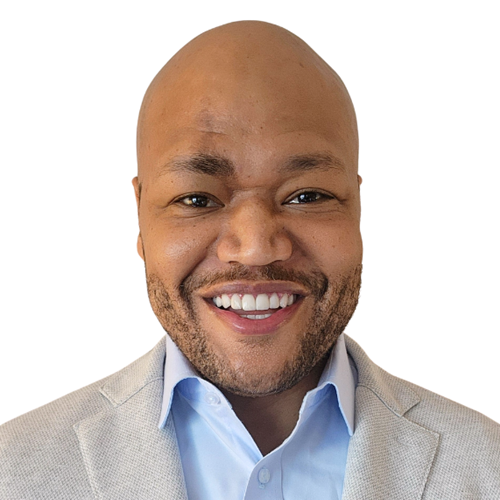 Dr. Preston D. Cherry, CFP®, Ph.D.Social Links NavigationFounder and CEO, Concurrent Wealth Management
Dr. Preston D. Cherry is the founder and CEO of Concurrent Wealth Management, an award-winning, Houston-based fiduciary firm serving high-earning Gen X professionals, business owners and executives nationwide. With nearly two decades of experience, Dr. Cherry helps clients align wealth with life through personalized financial planning, tax-efficient investment strategies and life-centered decision-making. His work focuses on retirement planning, executive and equity compensation, tax strategy, investment management and guiding clients through major life and career transitions with clarity and confidence.
Latest-
 Your Post-Accident Survival Guide, From an Insurance Expert
After a car accident, stay calm and document everything to preserve the facts. Remember: You don't have to solve the problem — that's why you have insurance.
-
 3 Investment Lessons From 2025 to Guide You Through 2026
Investors can use the past 12 months to guide their strategy for 2026 — and 2025 was living proof that time in the market can pay off.
-
 Nasdaq Adds 211 Points as Greenland Tensions Ease: Stock Market Today
Wall Street continues to cheer easing geopolitical tensions and President Trump's assurances that there will be no new tariffs on Europe.
-
Your Post-Accident Survival Guide, From an Insurance Expert
After a car accident, stay calm and document everything to preserve the facts. Remember: You don't have to solve the problem — that's why you have insurance.
-
3 Investment Lessons From 2025 to Help You Ride Out Any Storm in 2026
Investors can use the past 12 months to guide their strategy for 2026 — and 2025 was living proof that time in the market can pay off.
-
Nasdaq Adds 211 Points as Greenland Tensions Ease: Stock Market Today
Wall Street continues to cheer easing geopolitical tensions and President Trump's assurances that there will be no new tariffs on Europe.
-
 Should You Be Investing in Emerging Markets?
Economic growth, earnings acceleration and bargain prices favor emerging markets stocks right now.
-
 Estate Planning When You Have a Skeleton in the Closet
We asked estate planning experts how to keep transgressions secret, even after death.
-
 Are You and Your Financial Adviser in Sync on Social Security?
Deciding when to claim Social Security is tricky if you and your adviser haven't thoroughly covered the topic. Here's how to ensure you're on the right track.
-
 How to Find the Best International Moving Company for Your Big Move Abroad (and Avoid Costly Mistakes)
It's best to use an international moving company to protect your belongings and budget when relocating to another country. Here's how to find a reputable firm.
-
 Dow Soars 588 Points as Trump Retreats: Stock Market Today
Another up and down day ends on high notes for investors, traders, speculators and Greenland.